How to Buy Vintage Furniture Without Getting Burned
Vintage furniture is a great investment — if you know what to look for. Here's how to spot quality, avoid the duds, and buy with confidence.
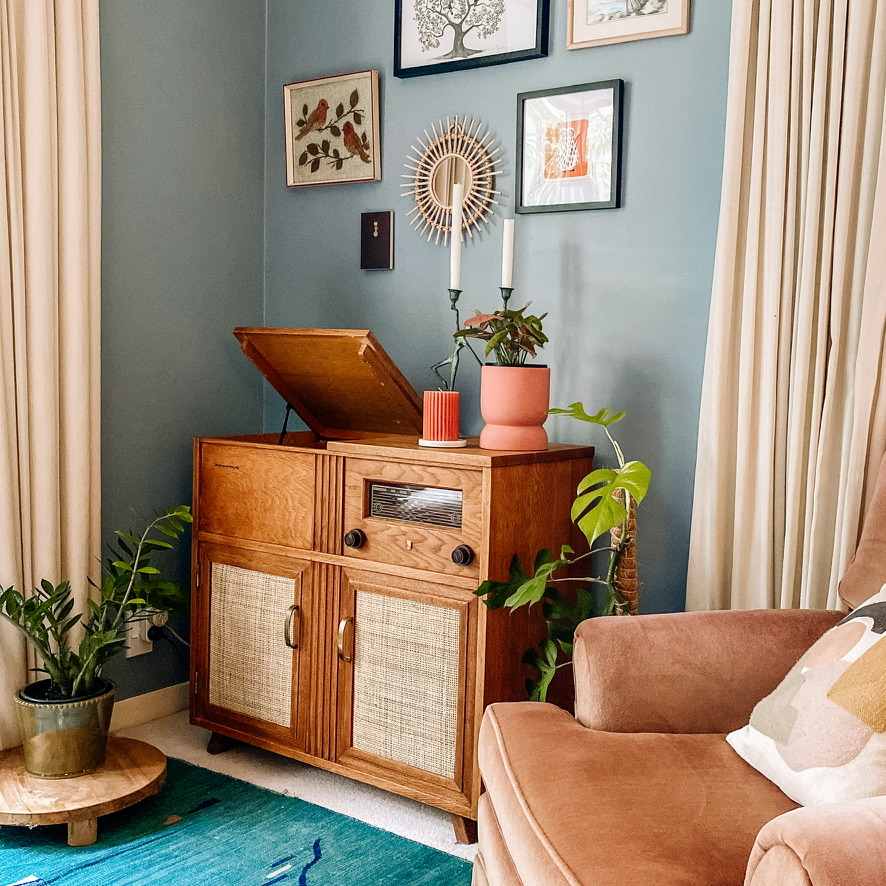
Buying vintage furniture can feel like a gamble if you don't know what you're looking at. Is that patina character or water damage? Is the wobbly leg fixable or terminal? Here's what to check before you hand over your money, whether you're buying in a store, at a market, or online.
Check the bones first
Flip it over. Seriously. The underside of a piece tells you more than the top ever will. Look at how the joints are made. Dovetail joints and mortise-and-tenon are the marks of quality construction; dowel joints are a step down but still far better than staples, nails, or glue alone. If it's held together with staples or nails alone, think twice.
Weight tells you less than you'd think: MDF is actually denser than a lot of softwood, so heavy doesn't always mean solid. What you're really testing for is flimsiness. Pick up a corner: if a dining chair feels hollow, light and cardboardy, it probably won't survive another decade. Then back it up by looking at the edges, the end grain and the underside, which is where solid timber gives itself away.
Know your timbers
Australian vintage furniture often uses teak, blackwood, Queensland maple, or silky oak. These are hardwoods that last generations. Parker, Fler, and Chiswell pieces from the 60s and 70s are particularly sought after. They were built properly and they're still holding up 50 years later.
If you can't identify the timber, that's okay. Press a fingernail into a hidden spot: softwoods like pine dent easily, hardwoods resist. It's a rough guide rather than proof (and it won't tell you whether a hardwood-looking surface is actually veneer), so treat it as one clue among several.
The smell test
This one sounds odd but it works. Open every drawer and cupboard and have a sniff. Musty is usually fine (that's just age and it airs out). But a sharp, acrid smell can mean mould deep in the timber, which is much harder to fix. Smoke smell is somewhere in between. It can be removed but it takes effort.
Cosmetic damage vs structural damage
Scratches, minor chips, and surface marks are cosmetic. They can be fixed with a bit of Danish oil, a wood filler, or a professional restore. Don't let cosmetic damage scare you off a great piece. It's usually why it's affordable.
Structural damage is different. Cracks that run along the grain, warped tops, loose joints that move when you push them, drawers that stick or won't close. These are bigger jobs. Not always deal-breakers, but factor the repair cost into your offer.
A good rule: if it's ugly but solid, buy it. If it's pretty but wobbly, walk away.
What to ask the seller
Where did you source it? Has it been restored or refinished? Do you know the maker or the era? A good seller will know the answers and be happy to share. If they're vague or defensive, trust your gut.
On Stuff Exchange, sellers are encouraged to be upfront about condition, provenance, and any restoration work. Our listings include condition descriptions and multiple photos so you can inspect before you commit.
Buying online vs in person
In person is always better for big pieces (you can check joints, smell drawers, and test wobble). But online has a much wider range. If you're buying online, look for listings with multiple photos (especially undersides and close-ups of joints), honest condition notes, and a seller who responds to questions.
On Stuff Exchange, every listing is reviewed before it goes live. Sellers are verified, and our buyer guarantee means if the item isn't as described, you're covered. It's the closest you'll get to buying in person without leaving your couch.
The golden rule
Buy what you love. Vintage furniture should make you feel something. If a piece stops you in your tracks, if you can already see where it goes in your home, that's the one. The market will always have more sideboards. But the one that speaks to you is the one worth having.