It's Only Veneer. Cool, So Was King Tut's Furniture.
Veneer has been a sign of quality craftsmanship since ancient Egypt. Here's how to tell real veneer from cheap laminate, and why dismissing it is a mistake.
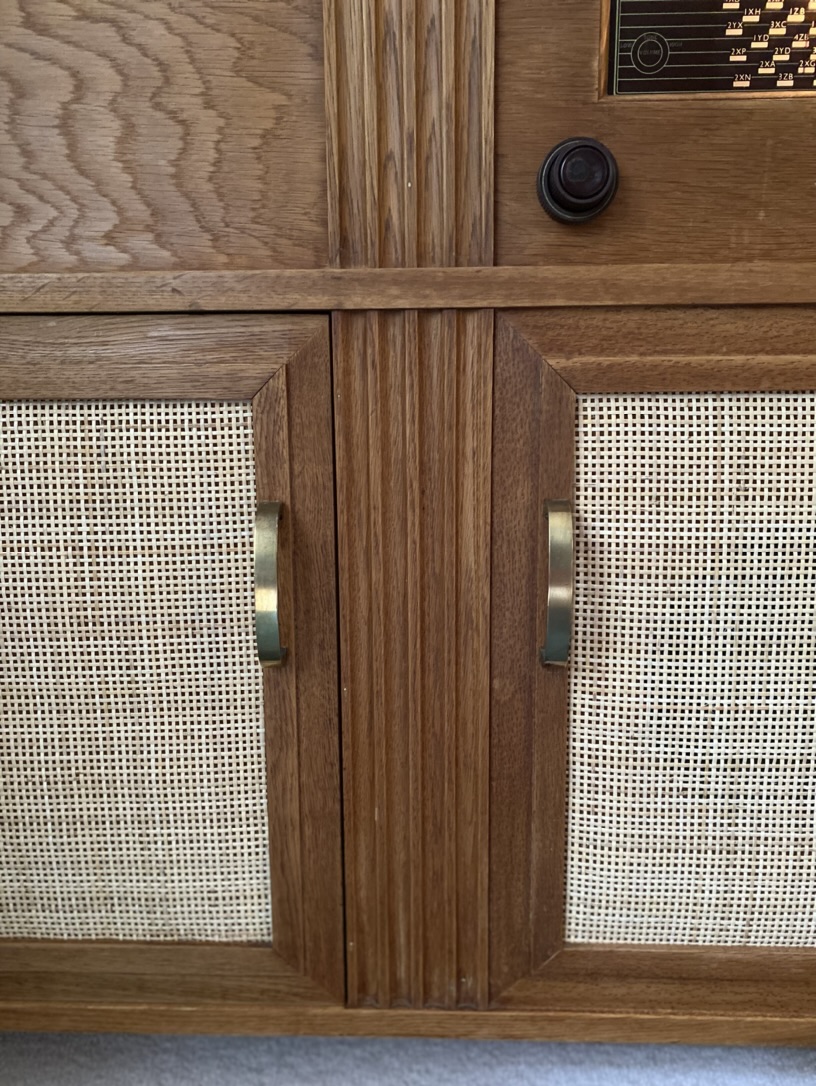
There's a moment at every market, every op shop visit, every Facebook Marketplace inspection where someone runs their hand along a piece of furniture, notices the veneer, and says it. 'Oh, it's only veneer.'
And every time, a furniture nerd somewhere sheds a quiet tear.
Because veneer isn't a shortcut. It's a 5,000-year-old technique. And dismissing it is one of the easiest ways to walk past genuinely good furniture without realising what you're looking at.
Veneer is older than the Roman Empire
Some of the most famous early veneer was found in Tutankhamun's tomb, from around 1323 BC. But the technique is older still, with veneered furniture surviving from Egypt's First Dynasty, around 3000 BC. Egyptian craftsmen were slicing exotic timbers paper-thin and gluing them over a more stable base, not to save money, but because it was the only way to show rare timber across a large surface without wasting it.
That's the bit most people miss. Veneer wasn't invented to make cheap furniture look expensive. It was invented because some things are literally impossible with solid timber.
Bookmatching is where veneer shines
Here's the one that changed how I think about it.
You know that mirror-image grain pattern you sometimes see on the doors of a quality sideboard? Where the left side is a perfect reflection of the right? That's called bookmatching, and on a wide panel it's really only practical with veneer.
To create it, a craftsman slices consecutive veneer sheets from the same piece of timber and opens them like a book. The two sheets share the same grain, mirrored. It's the reason veneer exists as a technique. Not a cost-cutting measure. Across a wide surface, it's the practical way to achieve that effect.
So when someone tells you 'it's only veneer,' what they're actually telling you is that the maker went to the effort of slicing, matching, and laying timber with that level of precision. That's not a compromise. That's skill.
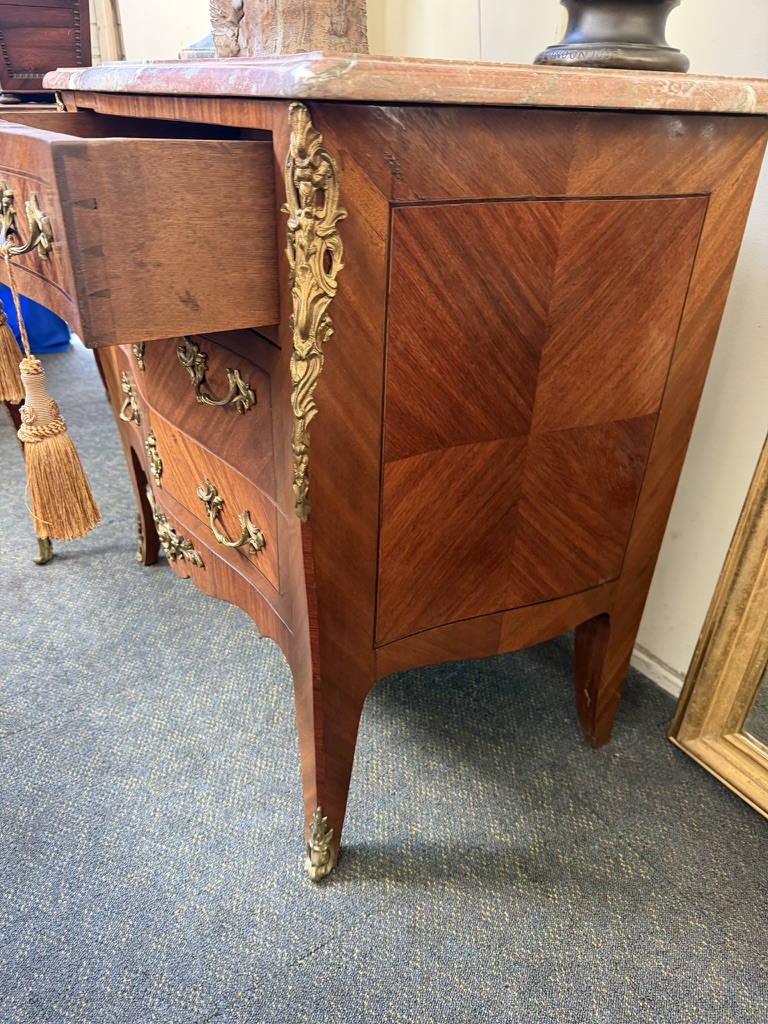
Veneer vs laminate vs printed film
This is where the confusion comes from, and it's fair enough. The word 'veneer' gets thrown around loosely, so here's how to tell what you're actually looking at.
Real timber veneer
A thin slice of actual wood, glued to a solid timber or plywood base. The grain is natural, it has texture you can feel with your fingernail, and it continues naturally around edges and corners. On vintage furniture, the veneer is often thicker than modern stuff (sometimes a millimetre or more), which means it can be sanded and refinished.
Laminate
A printed image of wood grain, pressed onto a synthetic surface. It looks decent from a distance but up close the pattern is too perfect. Too uniform. Run your hand over it and it feels like plastic because it is. The biggest giveaway: the pattern repeats at regular intervals. Real timber grain doesn't repeat.
Particleboard and MDF
Now, laminate isn't always a bad thing. It's brilliant on floors and kitchen benchtops, where it needs to handle water, heat, and daily abuse. That's what it was designed for. And it does show up on vintage furniture too. If you've ever seen a 1950s kitchen table with a Laminex or Formica top, that's laminate, and those pieces are collectible in their own right. But laminate on a sideboard or dining table that's trying to pass as timber? That's a different story. On those pieces, it's telling you the maker chose appearance over material, and that's worth knowing before you hand over your money.
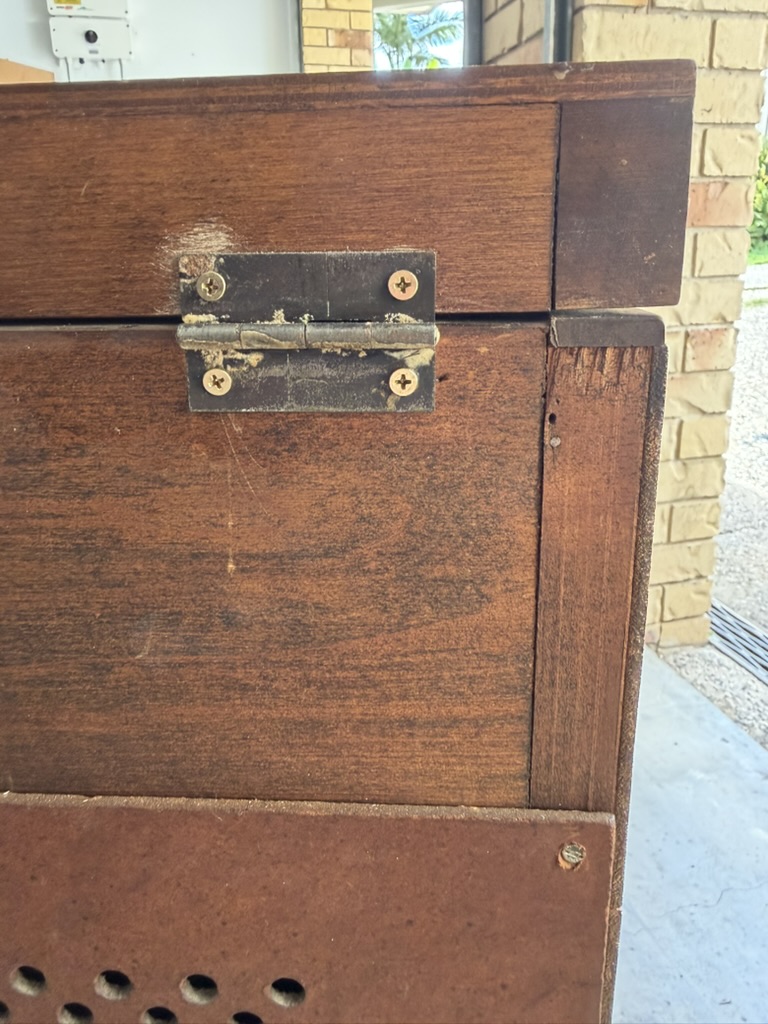
Medium-density fibreboard and particleboard are engineered boards made from wood fibres or chips, pressed together with resin. They show up more than you'd think on furniture from the 1970s onwards, including some genuinely good pieces. Radiograms, wall units, speaker cabinets. The timber carcass might be solid, but the back panel or internal shelves are particleboard. It's not ideal, but knowing it's there is better than not knowing.
Where it becomes a problem is when the entire piece is MDF with a printed surface pretending to be something it's not. MDF as a structural component in a well-made piece is fine. MDF as the whole piece with a photo of wood stuck on top is a different conversation.
Printed wood-look film
If you've ever had a piece of flat-pack furniture where the surface started peeling at the corners after a couple of years, that's printed film over particleboard. It's a photograph of wood, essentially. It can't be sanded or refinished. Most of us have owned furniture like this (it's fine for what it is, especially when you're starting out), but it's the stuff that's given veneer a bad name. And it's not veneer at all.
The 10-second test at the shop
Next time you're looking at a piece and want to know what you're dealing with.
Feel it. Real veneer has slight texture variations you can detect with your fingernail. Laminate and film are smooth and uniform.
Check the edges, and look at the back. On real veneer, the grain continues naturally from the top surface around to the edge and you can easily see the layers. On laminate, there's often a visible line where the printed surface meets the edge banding.
Look for the repeat. Stand back and scan the surface. If the grain pattern repeats at regular intervals, it's printed. Real timber doesn't do that.
Open a drawer. If the interior is the same quality as the exterior (real timber, good joinery), the veneer on the outside is almost certainly real. If the inside is bare particleboard with staples, you know where the budget went.
Why this matters when you're buying secondhand
The reason a lot of us defaulted to flat-pack for so long wasn't because we preferred it. It was because it was easy. One store, everything in stock, delivered Tuesday. Furnishing a whole house that way made sense when the alternative was spending weekends trawling markets hoping to get lucky.
That's changing. Buying quality secondhand furniture online is getting closer to that same convenience. You can search by style, compare prices, and find a solid timber sideboard with real veneer for less than the flat-pack version. The difference is one of them will still look good in 20 years.
A mid-century teak sideboard with real veneer and dovetail joints, priced at $80, is better made than most new furniture at five times the price. The veneer is real timber. It can be sanded lightly and re-oiled. The base is solid. It was built to last 50 years and it's already done that, so the proof is right in front of you.
The question isn't whether veneer is 'real' furniture. It's whether you can tell the difference between a 5,000-year-old woodworking technique and a photograph of wood on sawdust.
Now you can.