Mid-century modern furniture: how to spot the good stuff at op shops and markets
Mid-century modern furniture is still showing up at op shops for $50. Here's how to tell the real thing from a replica, and why the unlabelled pieces are the opportunity.
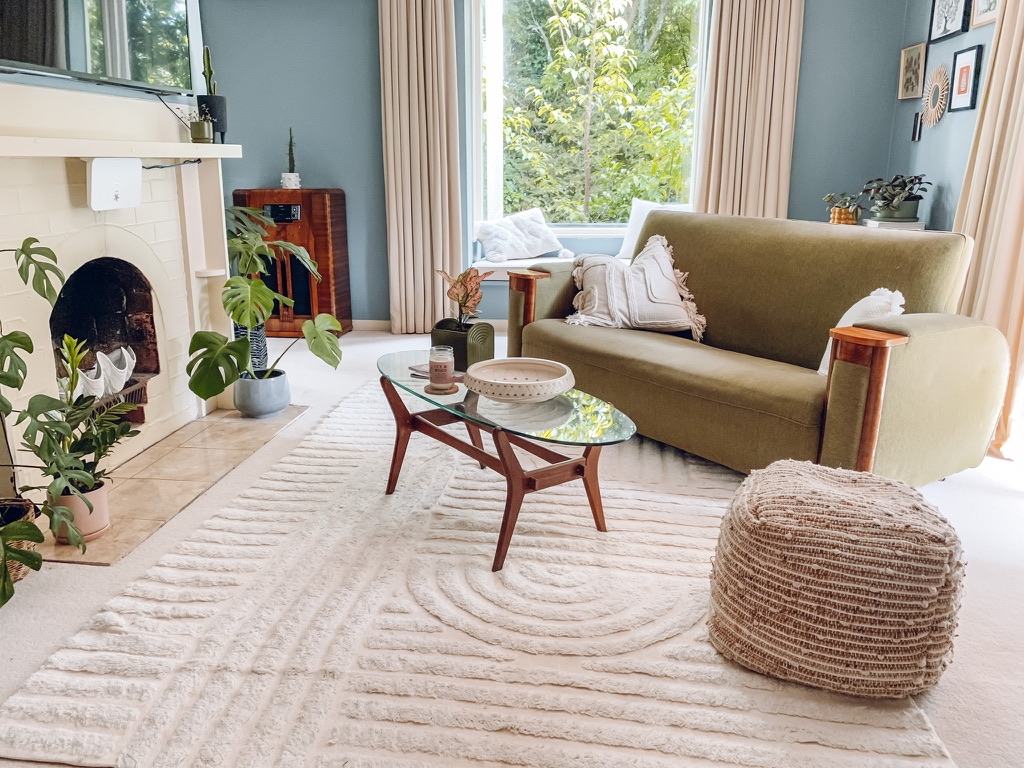
You know that teak sideboard your friend found at Vinnies for $40? The one you've been quietly annoyed about ever since? There's a reason it looks that good. It was built by people who borrowed techniques from boat builders, used timber imported from Southeast Asia, and designed furniture that was meant to feel good, not just look expensive.
That's mid-century modern. And it's still out there if you know what you're looking at.
The short version
Mid-century modern (MCM) covers roughly the 1940s to the late 1960s. It came out of Scandinavia and the US, and the core idea was pretty simple: furniture should work for how people actually live. Not how they want to be perceived. Charles Eames said he wanted his lounge chair to feel like "a well-used first baseman's mitt." That tells you everything about the philosophy.
In Australia, MCM took off because Danish and Australian designers were solving similar problems. Small houses, casual lifestyles, lots of natural light. The furniture was compact and made from warm timbers, and it fit. Local names worth knowing: Parker, Fler, T.H. Brown, Chiswell, and Grant Featherston, whose Contour chairs are Australian design landmarks.
Boat builders made your sideboard
This is the bit that surprised me when I first learned it. Danish furniture makers came from a deep woodworking tradition that overlapped with boat building, and you can feel it in the way the curves on a good MCM chair look organic rather than forced. Some of those curves are steam-bent; others, like moulded plywood, came from newer techniques entirely.
And the teak? Imported from Southeast Asia because it resists moisture. Your 1960s sideboard was engineered like a vessel. The timber selection, the joinery, the way the grain wraps around corners. None of that was decorative. It was structural.
The same goes for the tapered legs. They're not a style choice. Tapered legs that are part of the frame (not screwed on as an afterthought) distribute weight more efficiently. Form following function, before anyone put that phrase on a poster.
The unlabelled stuff is the opportunity
Here's where it gets interesting for anyone who likes a good hunt.
An original Eames Lounge Chair sells for well over $10,000 in Australia. A genuine Wegner Wishbone runs from several hundred dollars and up. These are the names everyone knows, so the prices reflect that.
But those same factories and workshops trained hundreds of smaller manufacturers who used the same teak, the same joints, the same steam-bending techniques. Their pieces are unlabelled, unrecognised, and sitting in op shops and garage sales across Australia. I've seen pieces that are structurally identical to designer originals going for $50 because nobody could find a maker's mark.
The absence of a label doesn't mean the absence of quality. It usually means a smaller workshop that couldn't afford marketing. The furniture itself tells you everything you need to know.
What to actually look for
If you're standing in an op shop wondering whether that sideboard is worth the $60 price tag, here's what to check:
Legs. Don't be put off by legs that unbolt: angled mounting plates and hanger bolts were how a lot of genuine mid-century furniture shipped flat, so removable legs are often original. Look instead at the quality of the timber and the fixings. A continuous, well-made joint from the leg into the body is a good sign; rough brackets bolted through a thin panel point to a later reproduction or a repair.
Timber. Teak and walnut are the classics. Teak has a warm, golden-brown colour and a slightly oily feel. Walnut is darker with a rich grain. Both age beautifully. If the piece has a veneer, that's not a red flag. Veneer on MCM furniture is a mark of quality (we'll get into that in another post).
Joints. Pull out a drawer. Look at the corners. Dovetail joints (interlocking triangular cuts) mean someone took the time. Staples or visible glue mean they didn't. Also check how the drawer slides. No soft-close runners. Those didn't exist yet. Genuine MCM drawers slide on timber rails. It sounds like a small thing, but it's one of the quickest ways to date a piece.
Finish. Run your hand across the surface. A warm oil finish that lets you feel the grain? That's original MCM. A thick, glossy lacquer sitting on top of the timber like a layer of plastic? Probably a reproduction or a refinish.
Weight. Pick it up (or try to). A solid teak or walnut piece has real heft, and that weight is usually a good sign. Very light can mean a thin veneer over a lighter core, which isn't automatically bad, but don't expect a genuine solid-timber sideboard to lift like a suitcase.
Why it still matters
There's a reason MCM furniture has held its value while most things from the same era ended up in landfill. The materials are genuinely good. Teak doesn't rot. Dovetail joints don't loosen the way screws do. Oil finishes can be refreshed in an afternoon. These pieces were designed to last decades, and most of them have.
The best MCM furniture isn't in galleries or curated vintage shops with $3,000 price tags. It's in op shops, at weekend markets, in the back of someone's garage. Unlabelled and underpriced. You just need to know what you're looking at.
And now you do.