What is a gossip bench? A guide to vintage hall tables
The hallway used to be a room with responsibilities. What a gossip bench was actually for, and how to tell an original from a reproduction.
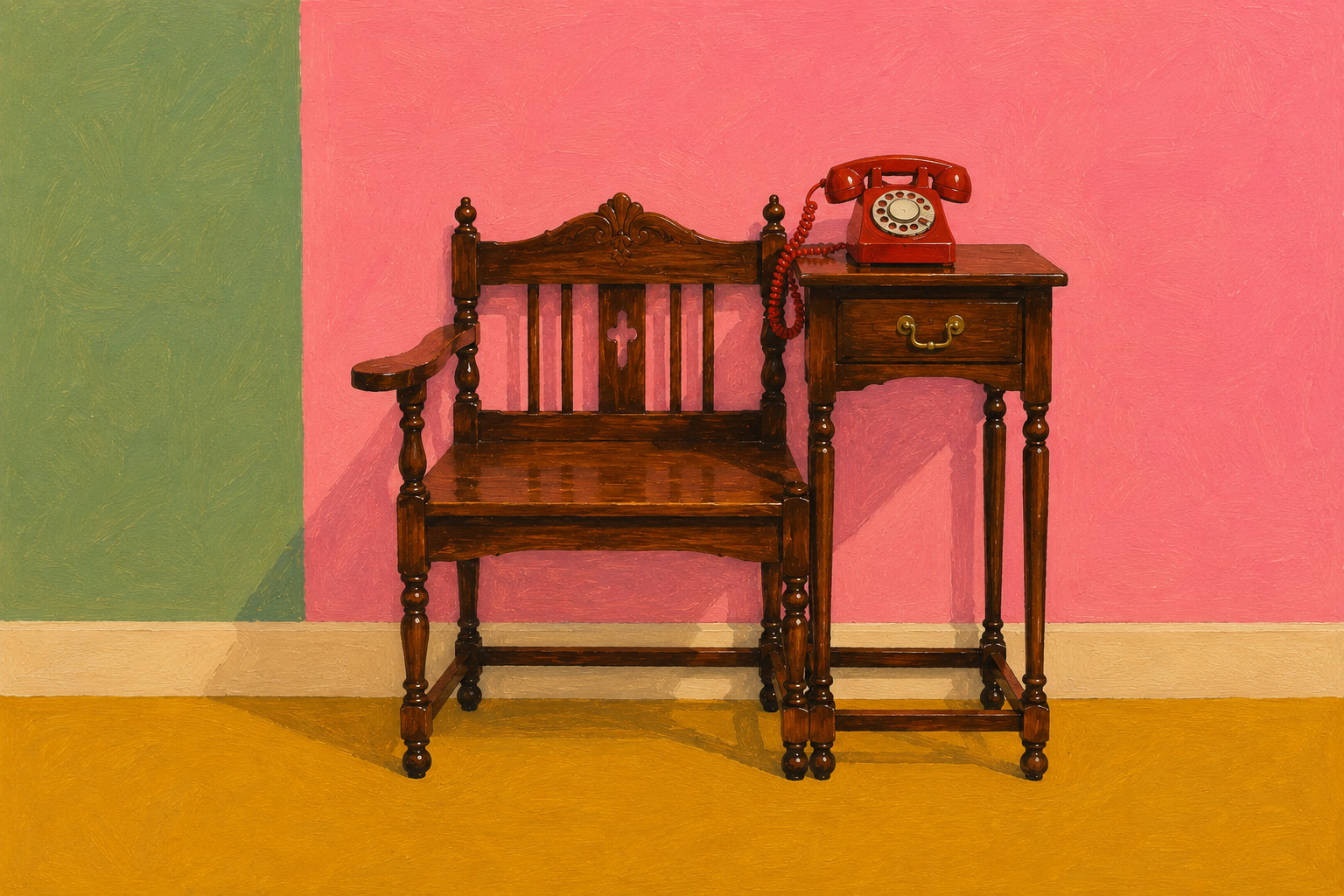
What has a seat, a shelf, and a drawer sized almost exactly for a phone book? ...A gossip bench! It exists because in the 1930s "telephone subscribers" kept sitting down mid-call (damn those cords), and some furniture maker worked out you could sell them a chair for it.
The hallway used to be a room with responsibilities.
In a Queenslander it runs straight through the guts of the house, and for about seventy years it did actual work. The telephone lived there. The mail landed there. If the call was a long one, you sat down. Three pieces of furniture were invented for that corridor, and all three now get sold as "occasional" tables, which is a polite way of saying nobody remembers what the occasion was.
The gossip bench (telephone table, telephone seat, hall seat) is a chair and a side table sharing a set of legs. Peak years roughly 1930s to 1950s, and it never really recovered from the cordless phone. Scandinavian ones are lean. Ours tend to be chunkier, and exactly the odd, lovely, why not sort of object that gets overlooked at every clearing sale.
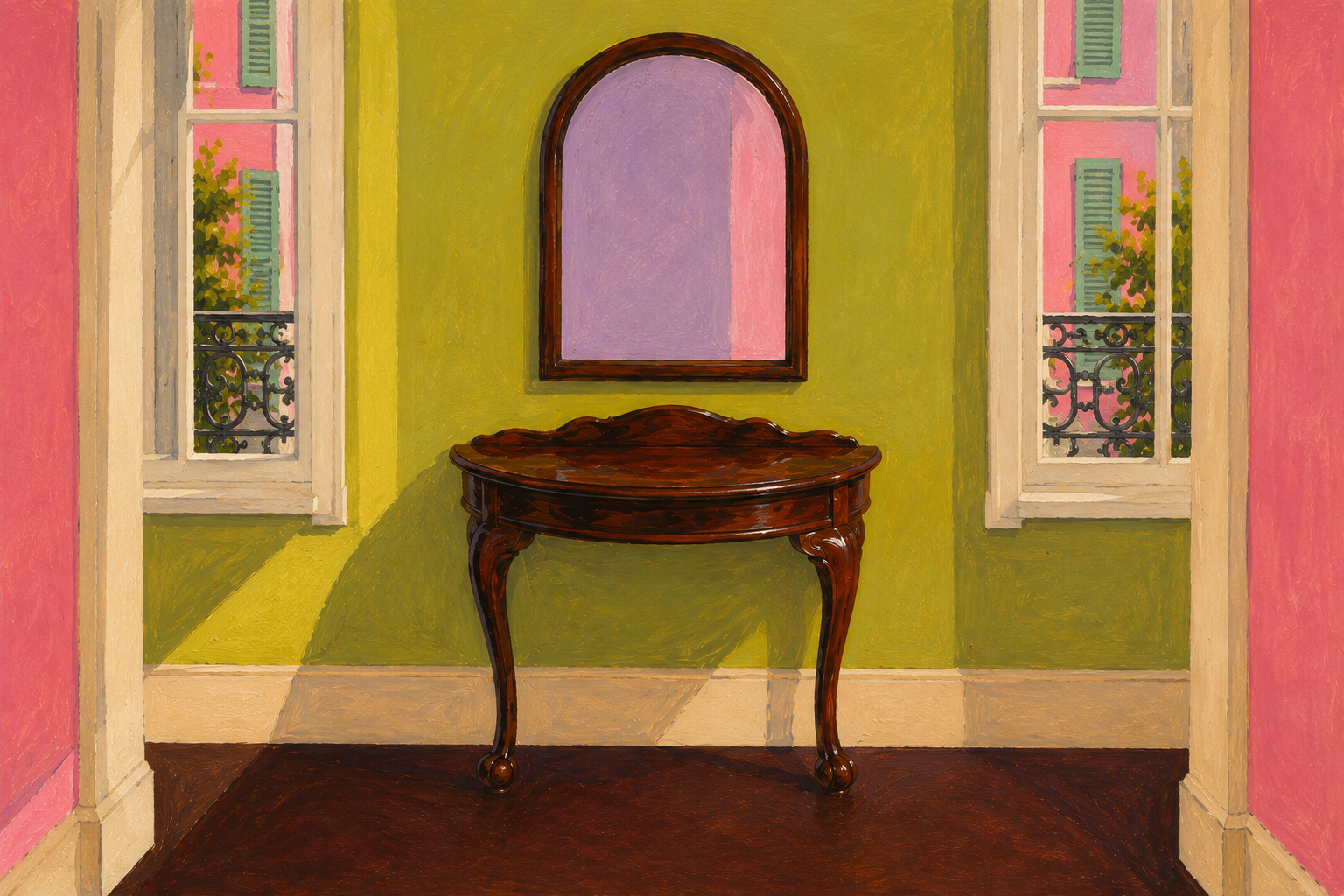
The demi lune is French for half moon, and the shape has nothing to do with saving space. It is a pier table, built for the pier, the stretch of wall between two windows in a 1770s drawing room. A mirror hung above, positioned so the reflection completed the half circle into a whole one. It only ended up in hallways later, flat back to the wall, curved front so nobody barks a shin walking past with an armful of shopping. Not what it was built for. Still the best use anyone has found for it.
The nest of tables is the oldest idea of the three. Thomas Sheraton wrote them down in his 1803 Cabinet Dictionary as "a kind of small worktable made to draw out of each other". Three is a trio, four is a quartetto. Built for card afternoons, and the reason your nan had four tables where one would do.
The hall stand is not a table, and I am putting it in anyway, because nothing worked harder in an Australian hallway. Mirror, hooks for hats and coats, a drip tray for wet umbrellas, often a drawer for gloves. One object doing five jobs, in the room where you arrive and leave. They are enormous, which is exactly why they were the first thing out when hallways got narrow.
So how do you tell an original from a reproduction?
Look at the proportions first. Hall furniture is wide and shallow, because hallways are narrow and always have been. Around 40cm deep and better than twice that wide is the shape to look for. Anything much deeper was made for a room, not a corridor.
Then look at the back. Period hall pieces lived flat against a wall, so the back is often plain or roughly finished, because nobody was ever going to see it. A piece beautifully finished on all four sides was probably never meant for a hall at all.
The thing people can find tricky is the styling. Just because it is dark timber and has turned legs does not mean it deserves a lace runner and dried flowers. Put the same piece against a bright wall with a contemporary vase, and it stops looking old and starts looking chosen.
The console table is the lone survivor, and only because it learned how to multitask on the job.
None of this furniture stopped being good. We just stopped having the hallway for it.
Romana x
Our sources, and further reading if you are in the mood for a rabbit hole
The pier table and the mirror that completes the circle come from the V&A collection notes on a 1785 pier table by George Brookshaw. Sheraton's own 1803 wording is in his Cabinet Dictionary, scanned page by page on the Internet Archive, which is a very good place to lose an afternoon. The gossip bench dates are the shakiest thing here, so take those as folk knowledge rather than gospel.